MWC Barcelona 2026: The most important new products and trends from the Mobile World Congress
MWC Barcelona is one of the largest trade fairs for mobile IT, telecommunications, and hardware. Accordingly, the IOTIQ team made sure to attend. Our goal was to observe market trends, learn about new technologies, explore potential partnerships, especially in the hardware sector, and identify relevant developments for our MDM customers. In the following article, we share our insights, highlights, and forecasts for the coming year.
Trends from the Mobile World Congress reflect the global political situation
The geopolitical and economic situation is anything but calm at the moment. The newly formulated political ambitions of the USA, in which tech companies play a central role, are having a noticeable impact on companies in Germany, especially on their IT hardware and software. European and German products are in increased demand, and MobiVisor MDM is also seeing additional inquiries in this environment. Data protection and digital sovereignty are the watchwords of the moment. Nevertheless, at first glance, it appears that Europe is not yet playing a leading role in terms of technological innovation. Chinese manufacturers, who almost exclusively dominate the rugged device segment, were very strongly represented, particularly in the hardware sector.
Rugged devices from China: What’s behind this development?
With MobiVisor MDM, we already have partnerships in the rugged device sector, for example with Crosscall. To further diversify our product portfolio, we also visited MWC Barcelona. We were particularly struck by the fact that approximately 95% of the rugged device providers were from China, such as Ulefone. These companies have specialized in specific sectors like construction, industry, healthcare, and logistics, and therefore offer specific, technically sophisticated features.
At Ulefone, for example, we noticed integrated night vision cameras, thermal cameras, large batteries with extremely long runtimes, and many other add-ons on some models.
This positions these rugged device providers as successors to CAT Phones, i.e., rugged devices under the CATERPILLAR brand, which ceased production in January 2024 and were among the major players in the rugged device market until then. Given that the mainstream smartphone and tablet market continues to be dominated by Apple and Samsung, neither of which offer their own rugged product lines, it makes sense for mobile device manufacturers to focus on precisely this market. This is further fueled by the ongoing digitalization of blue-collar industries, particularly in emerging markets. The result is a constantly expanding market. Our customers are also increasingly relying on rugged devices. For example, they are using scanners from Point Mobile, a South Korean manufacturer.
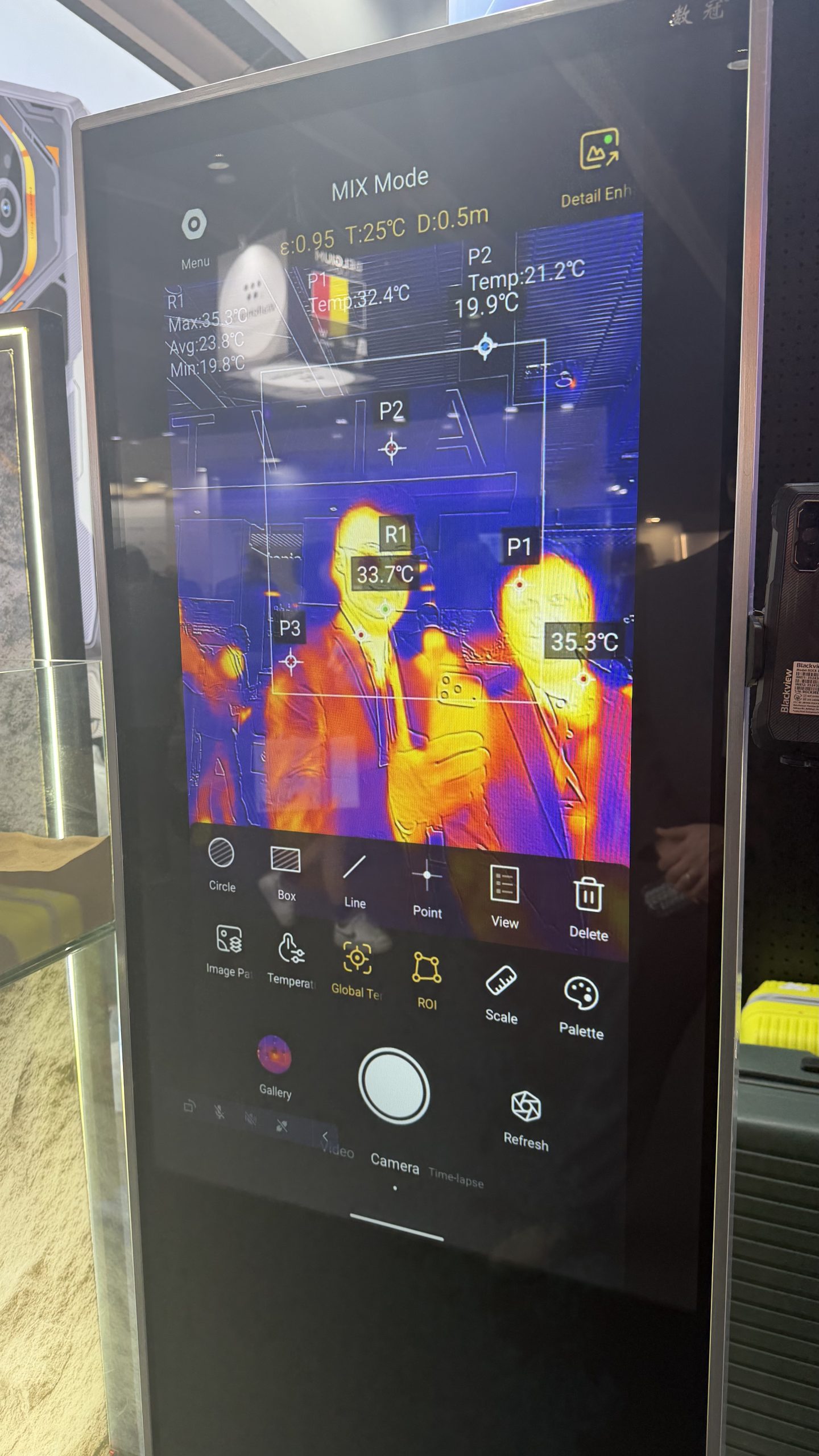
Left: The thermal camera from Ulefone put to the test
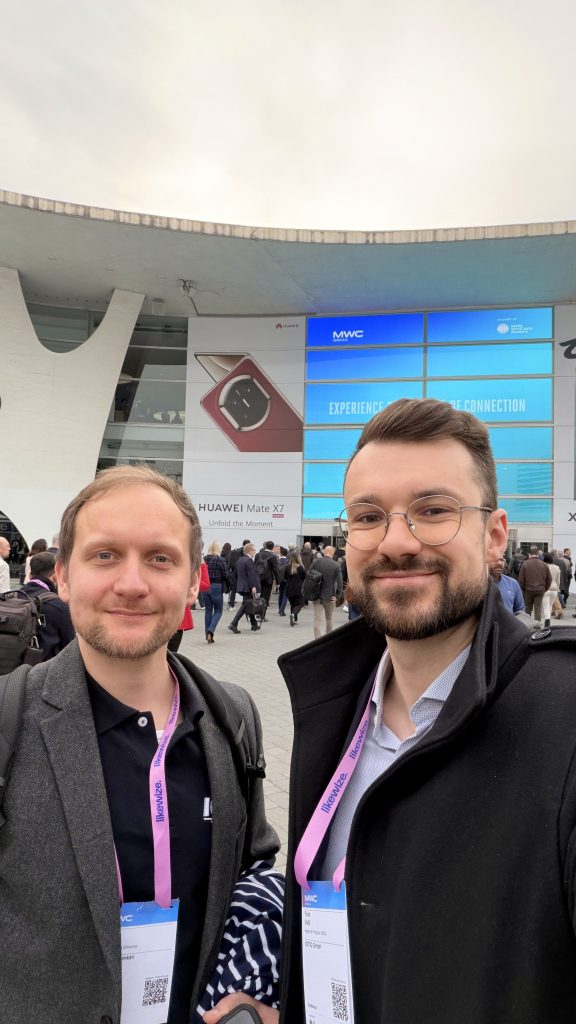
Right: Our Managing Director Sven Noack and Product Manager Toni Voß in front of the gates of MWC Barcelona
Chinese hardware in use in Germany: a problem for the GDPR?
When using hardware from Chinese manufacturers, buyers must be aware of the potential risks. These include the extensive collection of personal data, also for advertising purposes, and the uncontrolled flow of data, which would compromise the protection of European users’ data. However, Chinese manufacturers are generally obligated to comply with the GDPR if they want to sell their products in Europe. Consumers should therefore avoid importing mobile devices directly from China and instead purchase them through an official European retailer that offers the GDPR-compliant version.
Having met several Chinese software and hardware providers at the trade fair and witnessed numerous other futuristic-looking technological developments alongside mobile devices, we are left with the impression that Asian manufacturers are, in some cases, significantly more technologically advanced than their European counterparts. Thus, Asia, and China in particular, will remain a key driver of innovation in 2026.
Europe is following suit! Our highlight at MWC Barcelona
But exciting innovations aren’t just coming from Asia; Europe also impressed us with new developments. At the Deutsche Telekom booth, we were able to experience the T-Phone and the T-Tablet 2 live. These devices are designed to be particularly compelling thanks to their integrated AI functions. Importantly, these functions can be deactivated at any time, which is relevant for GDPR compliance in companies. We were especially impressed with the T-Tablet 2 because it uses NXTPaper technology. With the touch of a button, the display can switch to an E-Ink-like display, which significantly reduces eye strain during extended reading sessions.
Another highlight from Europe is the Jolla Phone. This Linux-based smartphone, developed by a Finnish company, states on its website:
„We develop Sailfish OS, the only European mobile OS, trusted globally for over a decade, and now enhanced for AI-driven applications. Our AppSupport technology enables Android™ apps to run on Linux platforms. Our privacy-focused Jolla Mind2 AI computer delivers secure AI capabilities across industries. With over 60 successful software release deliveries and a proven track record across multiple hardware platforms, we collaborate with partners in the automotive and telecommunications sectors to drive innovation with our OS and Edge AI technologies.“
(www.jolla.com, abgerufen am 13.03.2026)
Thanks to its Android app integration, this smartphone is significantly more practical than many other Linux smartphones. In the future, where data sovereignty becomes increasingly important, this could also lead to a rise in the use of Linux-based smartphones. However, this also means that MDM providers need to catch up, as the market for MDM solutions that also support Linux is currently very small. We at MobiVisor MDM are also currently working on this development. For anyone looking for genuine alternatives to the Google ecosystem, Jolla is definitely a name to keep an eye on.
Will AI replace Software-as-a-Service solutions?
One of the dominant themes at MWC Barcelona was artificial intelligence. It is increasingly being integrated into the hardware and software of mobile devices. Typical developments include AI chips in smartphones, on-device processing, and local AI assistants. AIs are becoming ever more deeply integrated into existing software systems and complement SaaS solutions. The impression that SaaS solutions will be completely replaced by AI applications in the future has not (yet?) been confirmed. In our view, the AI features presented as new seemed insufficiently innovative, even though there are interesting applications for optimizing workflows, creating graphics, and much more. In our opinion, the SaaS industry will not be completely replaced by AI, but it is transforming and further developing “AI-native” solutions that run more autonomously and are more process-oriented.
Smart glasses at MWC Barcelona: An interesting gadget, but not yet ready for the masses.
At MWC Barcelona, we also saw some new smart glasses that we were able to test, including the smart glasses from Qwen-AI (Alibaba Group) and the smart glasses from Meta Platforms. Naturally, the smart glasses attracted a lot of attention, resulting in long lines for a test run. However, disappointment quickly followed: Meta’s offering, while boasting good camera technology, didn’t include augmented reality. This feature is only available in the latest model, which isn’t yet available on the German market. Qwen-AI’s glasses showed initial AR capabilities, but the image quality left much to be desired. At the same time, it was revealed that photos and videos taken with Meta glasses were being illegally reused, and that the implemented mechanisms for labeling recordings could be easily circumvented, preventing others from knowing whether they were being recorded or not. This data privacy scandal further fuels the already critical discussion surrounding wearables.
One of the positive aspects of using smart glasses is the completely hands-free operation. These include quick photo and video recording, particularly useful for documentation, simultaneous translation, and functions such as listening to music, making phone calls, and sending messages. However, these advantages are offset by a still relatively high price and limited practical use, as currently both smart glasses and a smartphone are required to use all the functions properly. The high price also makes them more of a gadget for a small number of users. The much-touted AI features of the smart glasses also fell somewhat short of expectations. For example, the Meta AI Glasses interpreted bottle corks as edible snacks. Well, bon appétit!
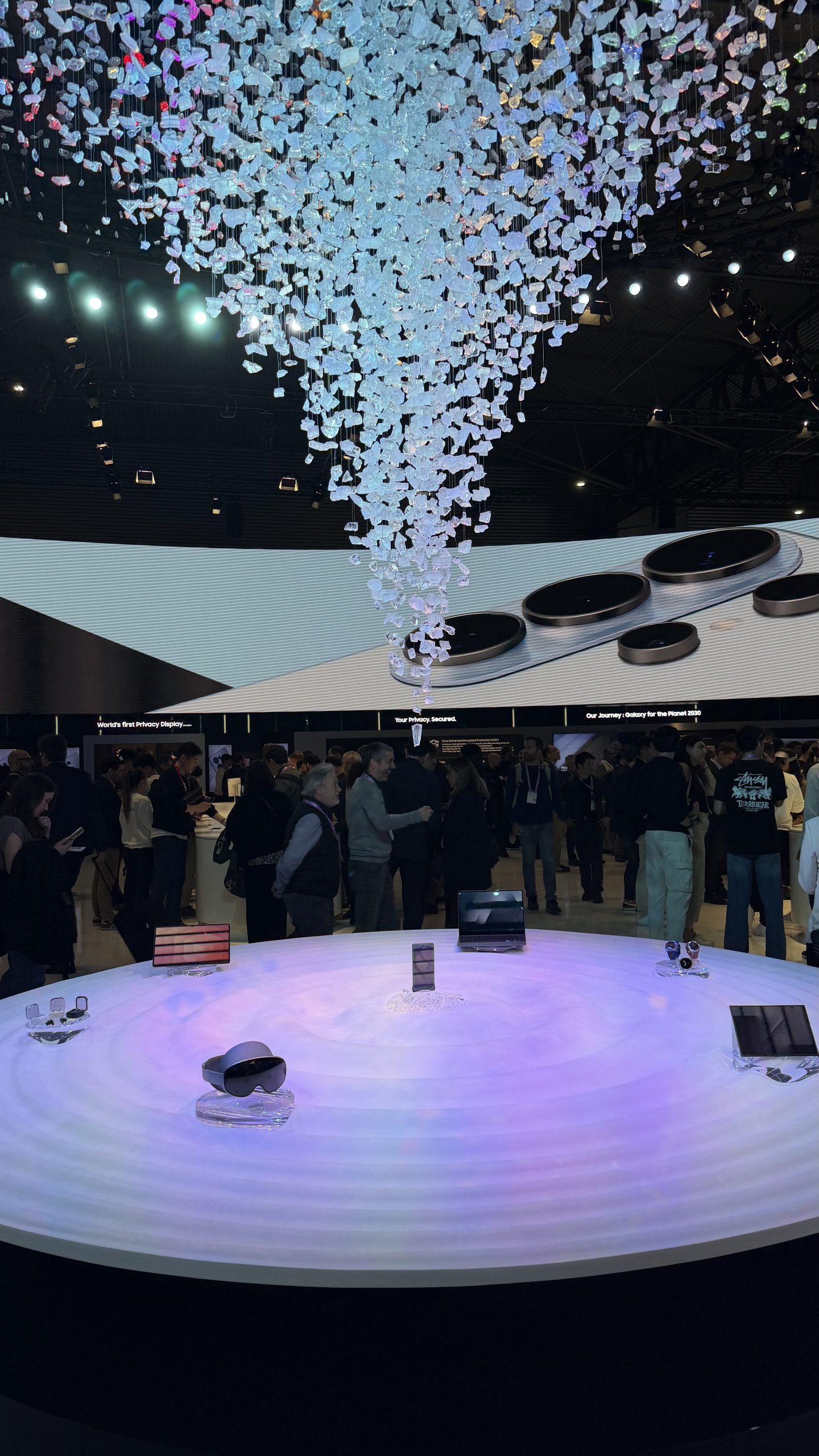
Left: Smart Glasses on Display
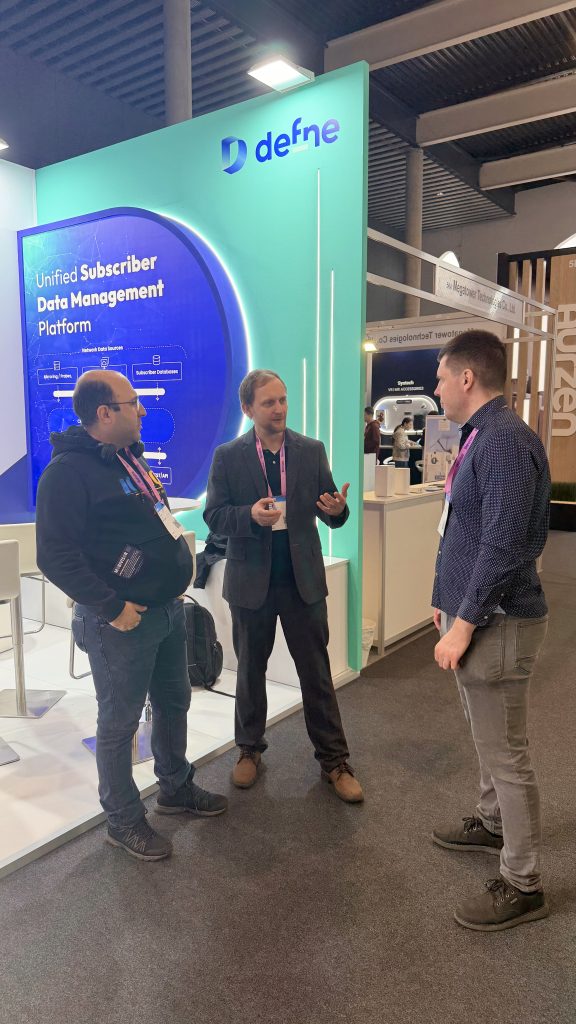
Right: Sven Noack (CEO, IOTIQ GmbH Germany) und Özer Aydemir (CEO, IOTIQ GmbH Turkiye) mid-conversation
Our conclusion on MWC Barcelona 2026
MWC 2026 clearly illustrated the divided landscape of the mobile communications industry. On one side are Chinese manufacturers, dominating with a seemingly endless stream of innovation and a massive market presence. This is evident in their strong presence in the rugged device sector, as well as in the consumer market, where Xiaomi and Samsung wield considerable market power. On the other side is a European ecosystem that, while showing promising initial steps, still has significant room for improvement in terms of breadth and speed of innovation, particularly in the areas of rugged devices and innovative hardware. For us as an MDM provider, MWC clearly confirms one thing: the demand for digital sovereignty, data protection, and secure device management is growing. At the same time, the challenge of identifying and qualifying trustworthy hardware is only increasing. We will continue to address this issue, for our own benefit and for yours.

